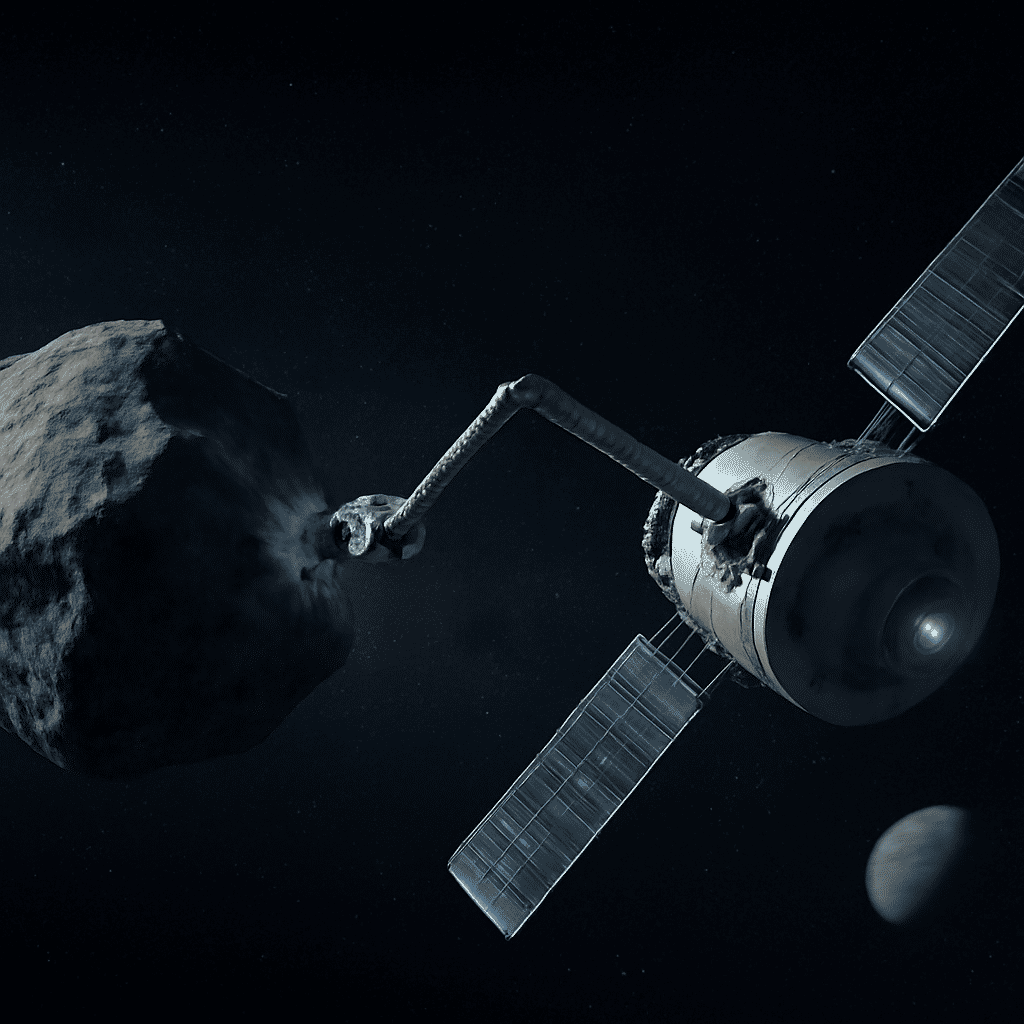
In the vast expanse of space, where the unknown beckons with mysteries untold, the integration of artificial intelligence (AI) stands poised to revolutionize the way we explore the cosmos. As humanity pushes the boundaries of exploration, AI emerges as a critical tool in enhancing the efficiency, safety, and scope of space missions. This technological synergy is not just an evolution; it is the next frontier in our quest for understanding and discovery beyond Earth.
Space exploration, by its very nature, is fraught with challenges. From the unpredictability of extraterrestrial environments to the sheer distance from mission control, each venture into space requires precision, adaptability, and resilience. AI technologies are well-suited to address these challenges, offering capabilities that extend the reach and capabilities of human explorers.
One of the most transformative applications of AI in space is in the realm of autonomous spacecraft navigation. Deep space missions, such as those journeying to Mars or beyond, involve vast distances and extended travel times, making real-time communication with ground control impractical. Here, AI's ability to make instant, data-driven decisions enables spacecraft to autonomously adjust their trajectory, manage resources, and respond to unforeseen obstacles or variations in the environment.
Moreover, the data gathered by satellites and probes is staggering in volume and complexity, often exceeding the capacity for human analysis. AI's capacity for big data analysis allows scientists to sift through this information efficiently, identifying patterns and anomalies that may indicate new discoveries or potential hazards. Machine learning algorithms are particularly adept at this, learning from vast datasets to predict meteorological phenomena, track asteroid movements, and even identify planetary features that might go unnoticed by the human eye.
AI is also becoming indispensable on the surface of other planets. Rovers equipped with AI systems can navigate the rugged terrains of alien landscapes, make autonomous decisions on their exploration paths, and conduct scientific experiments with minimal human intervention. For instance, NASA’s Mars rover, Perseverance, employs AI to optimize its route, analyze rock samples, and send meaningful data back to Earth, significantly enhancing mission efficiency.
Moreover, as we inch closer to the goal of establishing human colonies on the Moon or Mars, AI will play a vital role in habitat construction, resource allocation, and sustainable living. Robots equipped with AI can assist in building infrastructure, farming, and managing essential supplies, thus supporting the long-term habitability of these distant colonies.
In addition to enhancing operational capabilities, AI contributes significantly to mission safety. By predicting potential system failures or analyzing environmental risks, AI systems can preemptively alert mission control, allowing for timely interventions that protect both life and equipment.
Beyond its technical prowess, AI represents a bridge between human ingenuity and the universe's infinite possibilities. Its applications open up new horizons for educational and collaborative opportunities as scientists, engineers, and technologists across disciplines collaborate to embed AI into every aspect of space exploration. This cross-pollination of ideas fosters innovative approaches to age-old questions: Are we alone in the universe? What secrets about our origin and future lie in the stars?
Yet, as we embrace AI's capabilities, we must also address ethical considerations and ensure responsible deployment. The autonomous nature of AI requires robust safety protocols and ethical frameworks to prevent risks associated with over-reliance on machines, ensuring that human oversight and accountability remain central to space missions.
In conclusion, the integration of AI in space exploration is not merely an enhancement of existing processes; it marks a pivotal shift towards smarter, more profound exploration of the cosmos. As these intelligent systems continue to evolve, they promise to unlock new realms of discovery, enabling us to probe deeper into the universe's mysteries than ever before. The next era of space exploration promises not only to advance our technological prowess but to enrich our understanding of humanity's place in the grand tapestry of the cosmos.